

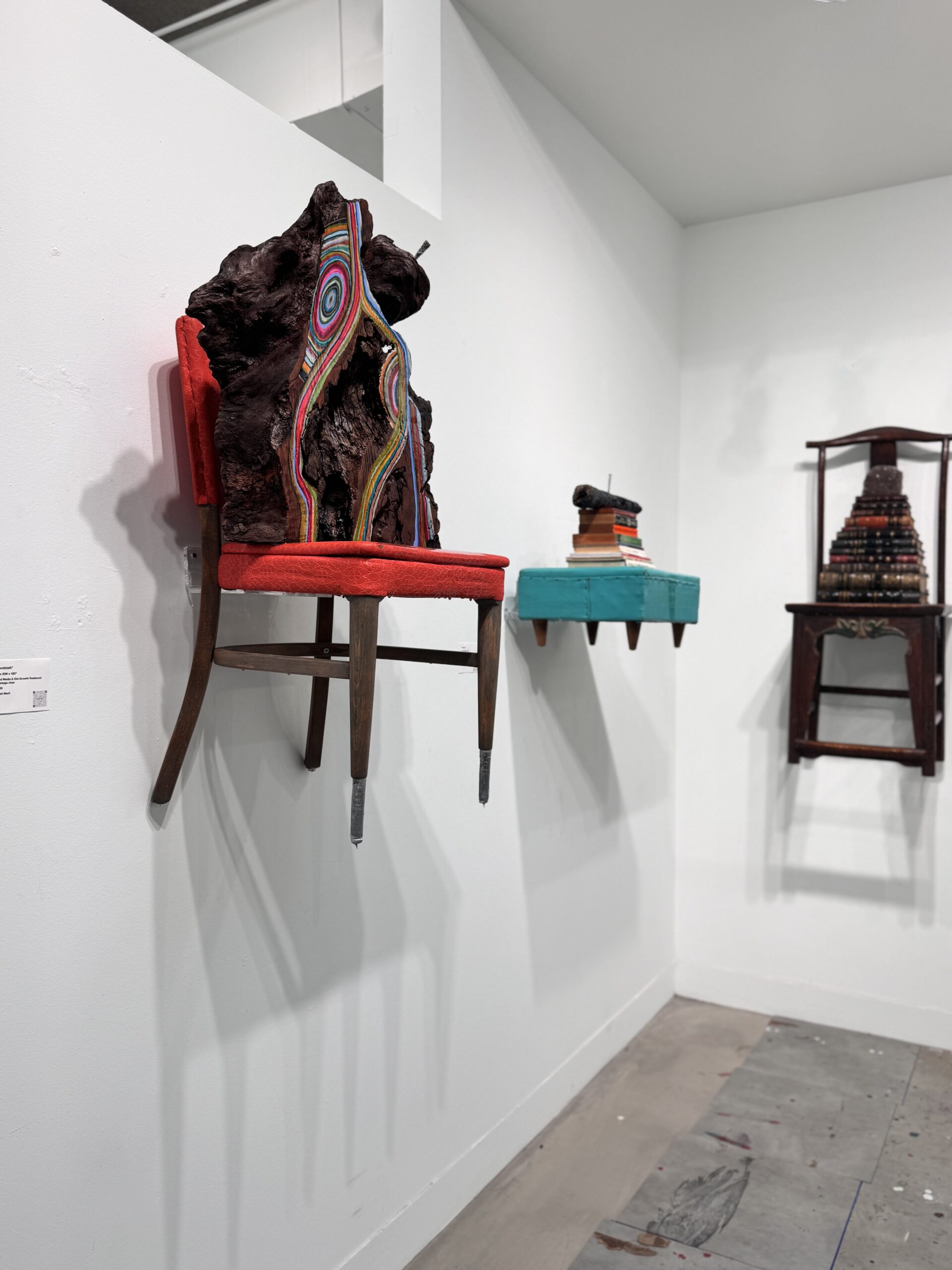


“Woodstock” Mixed Media Wall Sculpture, 40″ x 20″ x 18″, Ancient Old-Growth Redwood on 1960s Vinyl Chair
“Woodstock” – Where Ancient Redwood Giants Meet 1960s Optimism
This remarkable wall sculpture celebrates both the irreplaceable majesty of California’s old-growth redwood forests and the pivotal 1960s decade when environmental consciousness emerged alongside cultural revolution. Created by Dallas contemporary artist Christi Meril, “Woodstock” deliberately pairs a vintage orange vinyl kitchen chair from the 1960s with old-growth Northern California redwood to honor the very decade when these ancient giants finally began receiving the protection they desperately needed. The artist chose this pairing as a tribute to the era when America’s environmental awakening coincided with broader social movements, creating a poignant dialogue between the design optimism of the 1960s and the growing awareness that our natural heritage required urgent protection.
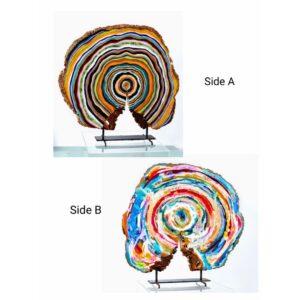
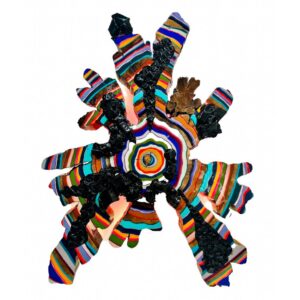
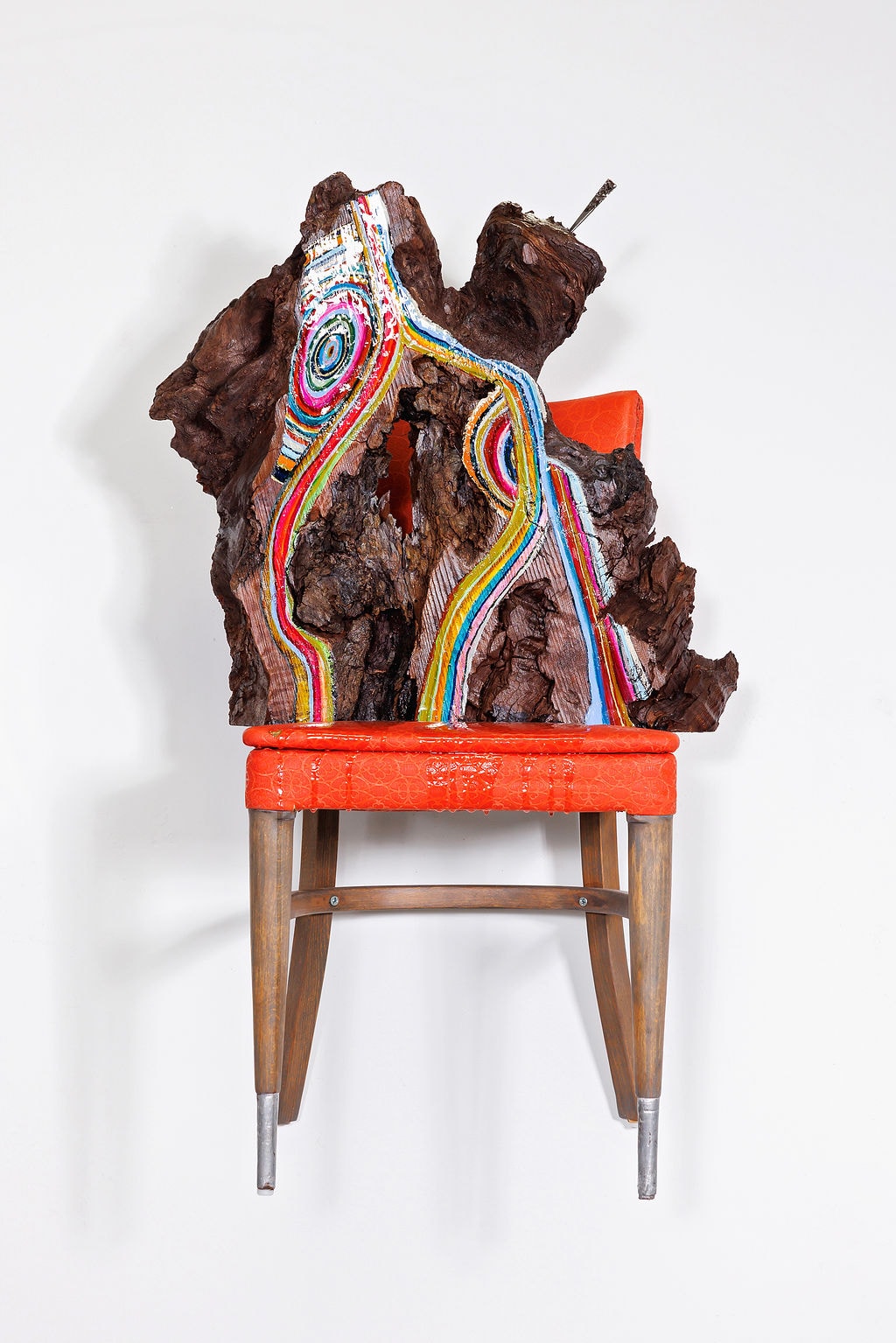
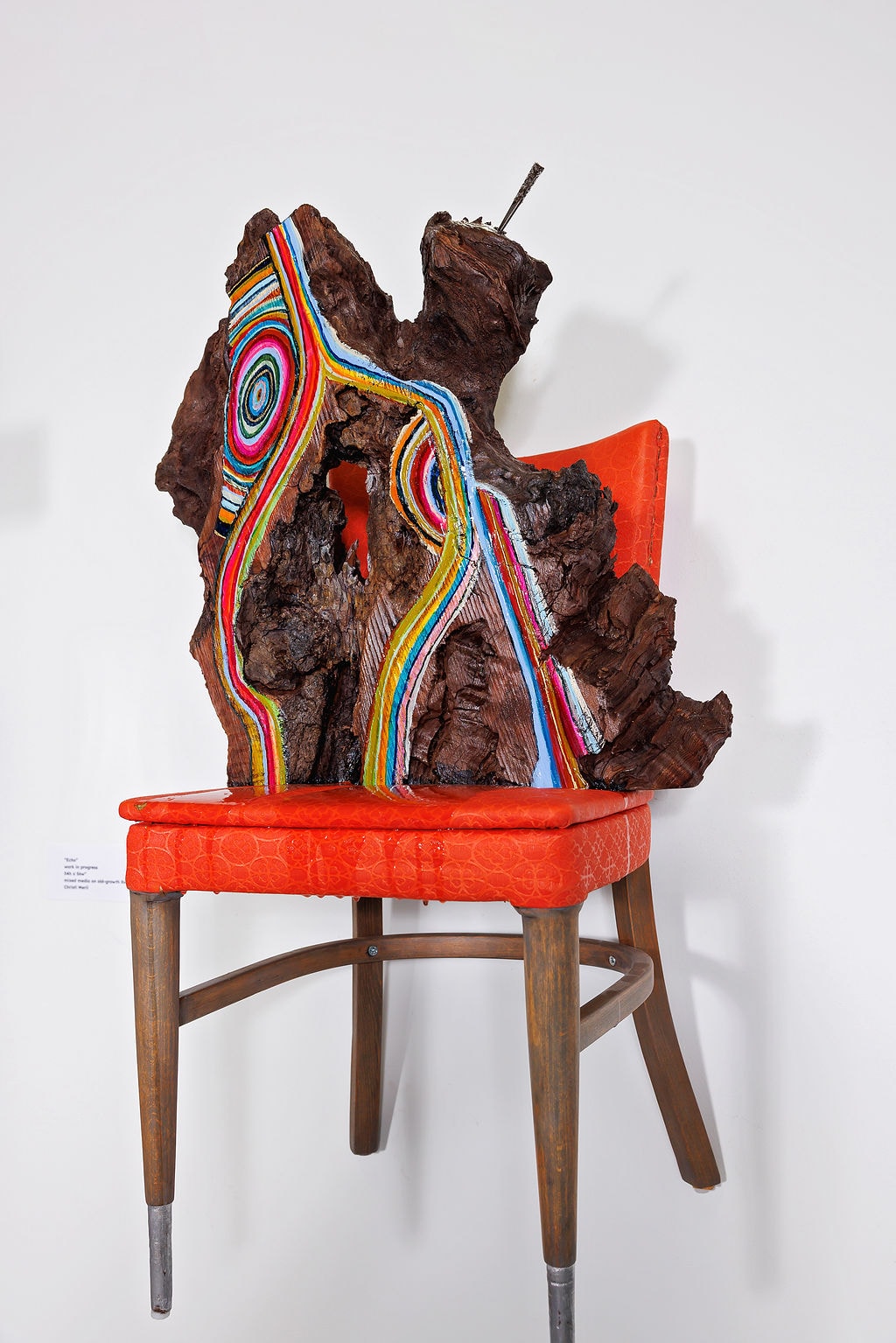
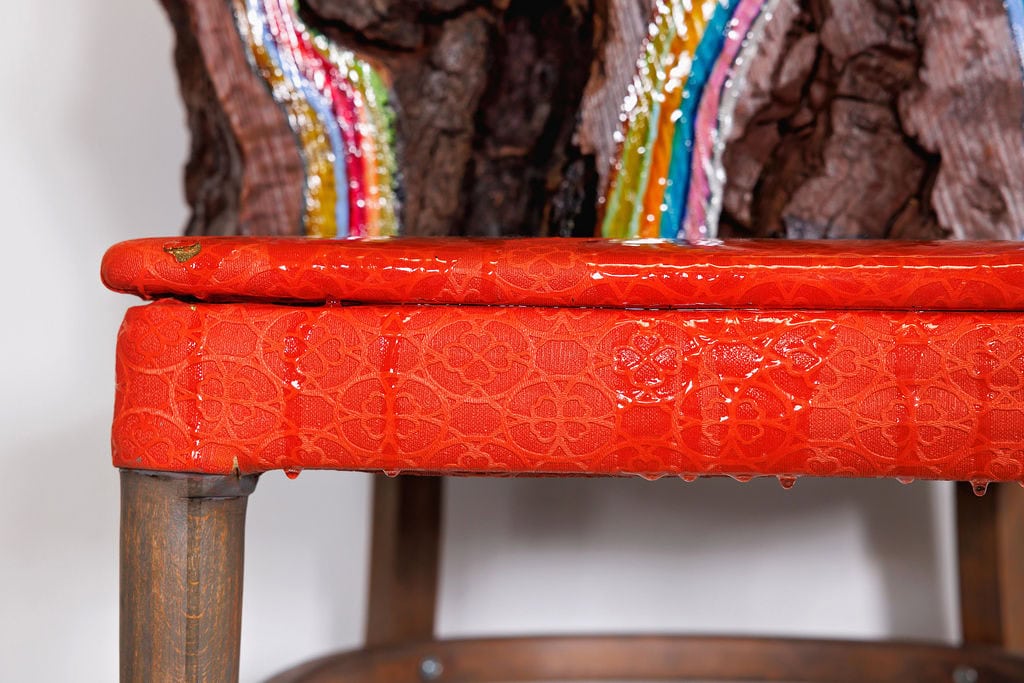
The sculpture’s foundation is an iconic orange vinyl chair from the 1960s, its bold color and sleek lines embodying the era’s optimistic embrace of synthetic materials and modern design. The chair’s vibrant orange surface, with its characteristic vinyl texture and mid-century proportions, provides a striking contrast to the organic complexity of the redwood while anchoring the piece in a specific moment of American design history. This was an era of space-age aesthetics and unprecedented prosperity, when plastic and vinyl represented the future’s unlimited possibilities.
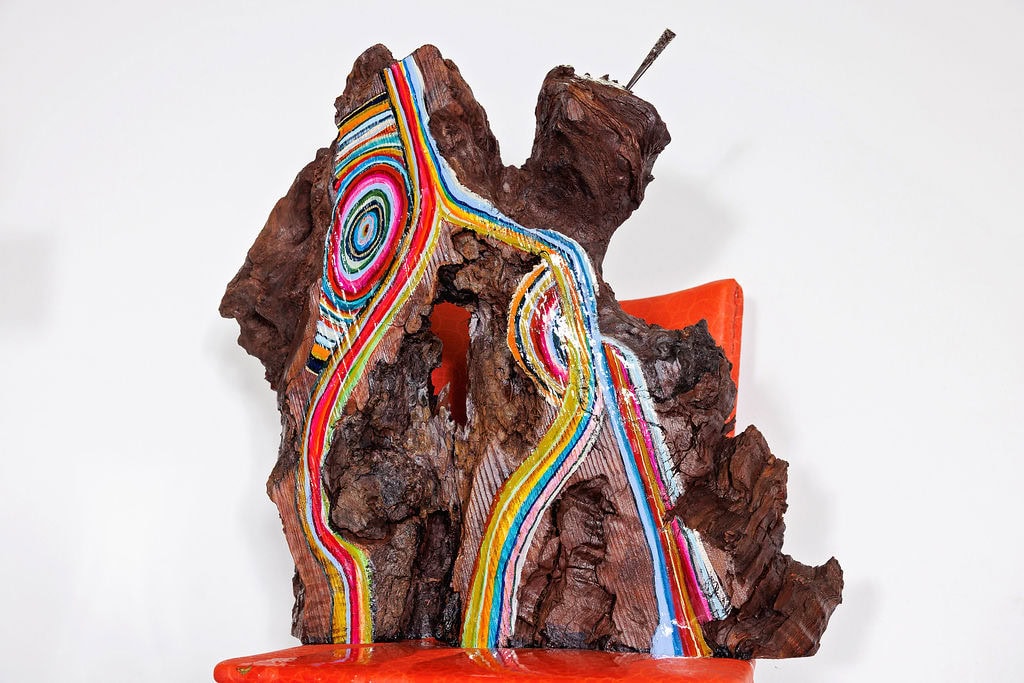
Mounted upon this modernist foundation is an extraordinary piece of old-growth Northern California redwood, sustainably sourced as a rare remnant likely harvested before the establishment of current environmental protections. Old-growth redwoods are scientifically defined as trees over 150-200 years old growing in stands that have never been commercially logged – ancient forest ecosystems that represent some of the planet’s most magnificent and irreplaceable natural heritage. These ancient giants, some reaching heights of over 350 feet and ages exceeding 2,000 years, create unique old-growth forest ecosystems that support countless species and store massive amounts of carbon. Today, less than 5% of the original old-growth redwood forest remains, making every piece of this ancient wood a precious archaeological artifact of California’s vanished primeval wilderness.
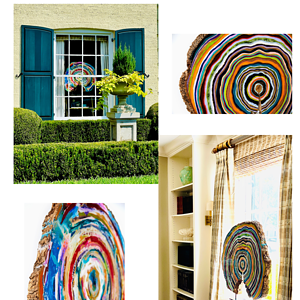
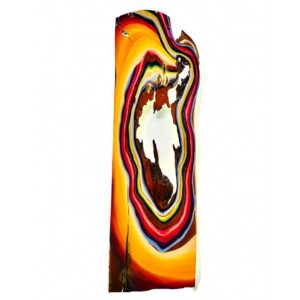
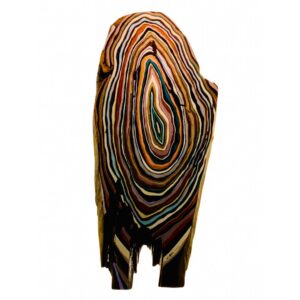
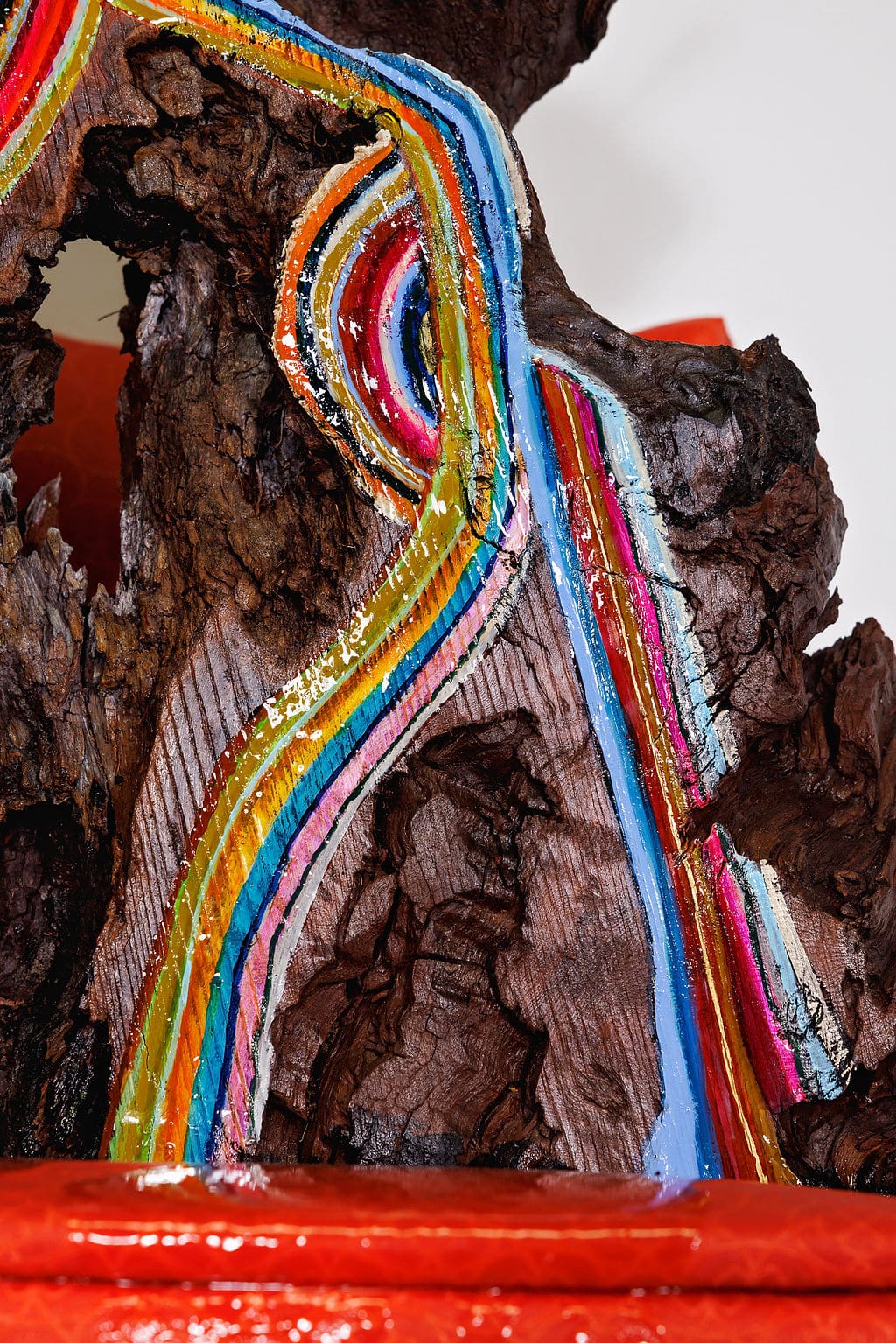
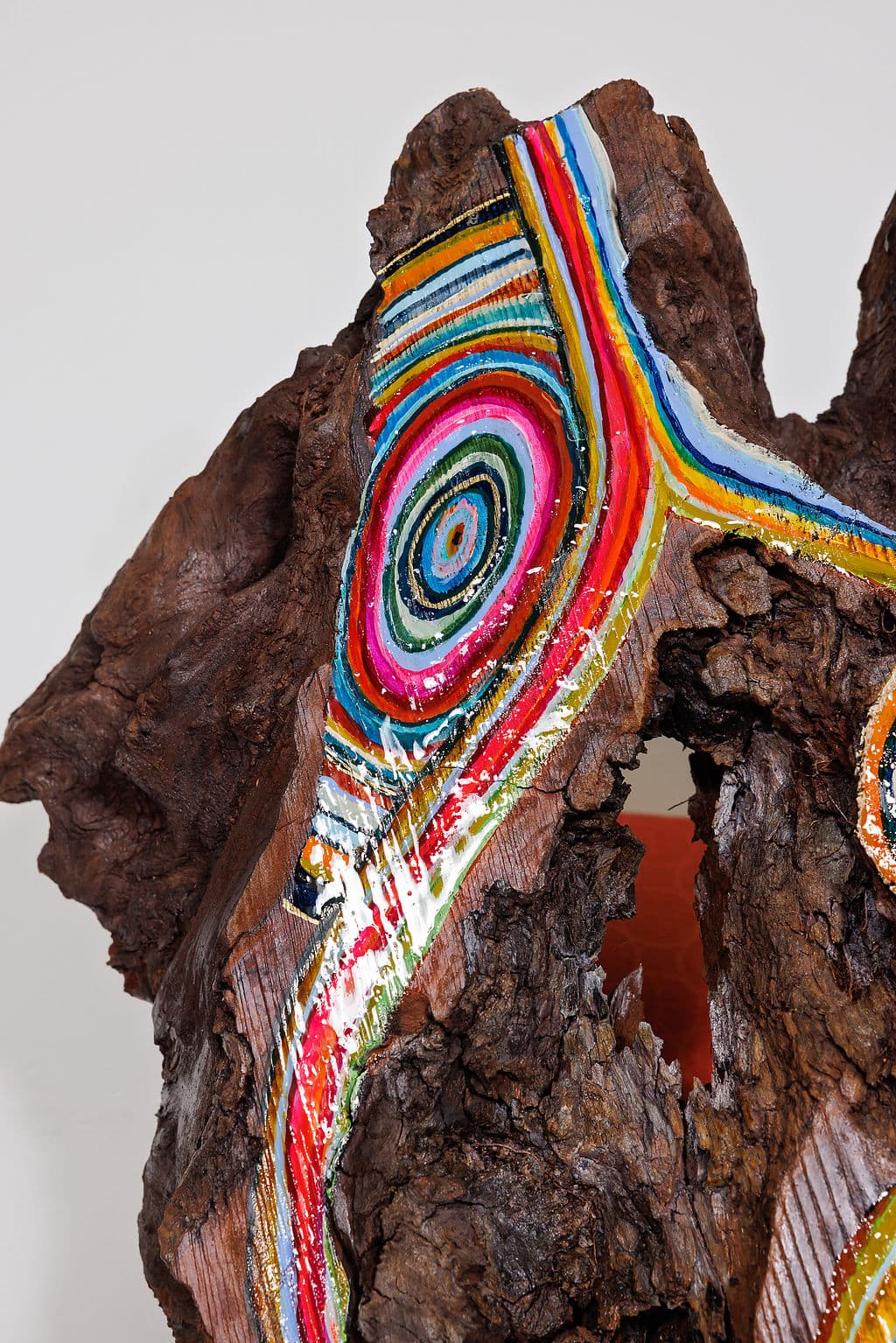
The redwood section reveals the spectacular natural artistry that develops over centuries of growth, intricate grain patterns, rich reddish-brown coloration, and the distinctive texture that made these trees both revered and coveted. Christi has enhanced this natural beauty with carefully applied paint that follows and accentuates the wood’s organic patterns, creating flowing streams of color that echo the geological stratifications found in her signature cairn and stone works. The painted elements don’t mask the wood’s character but rather illuminate its inherent sculptural qualities, suggesting the way water, light, and time create patterns in both stone and timber.
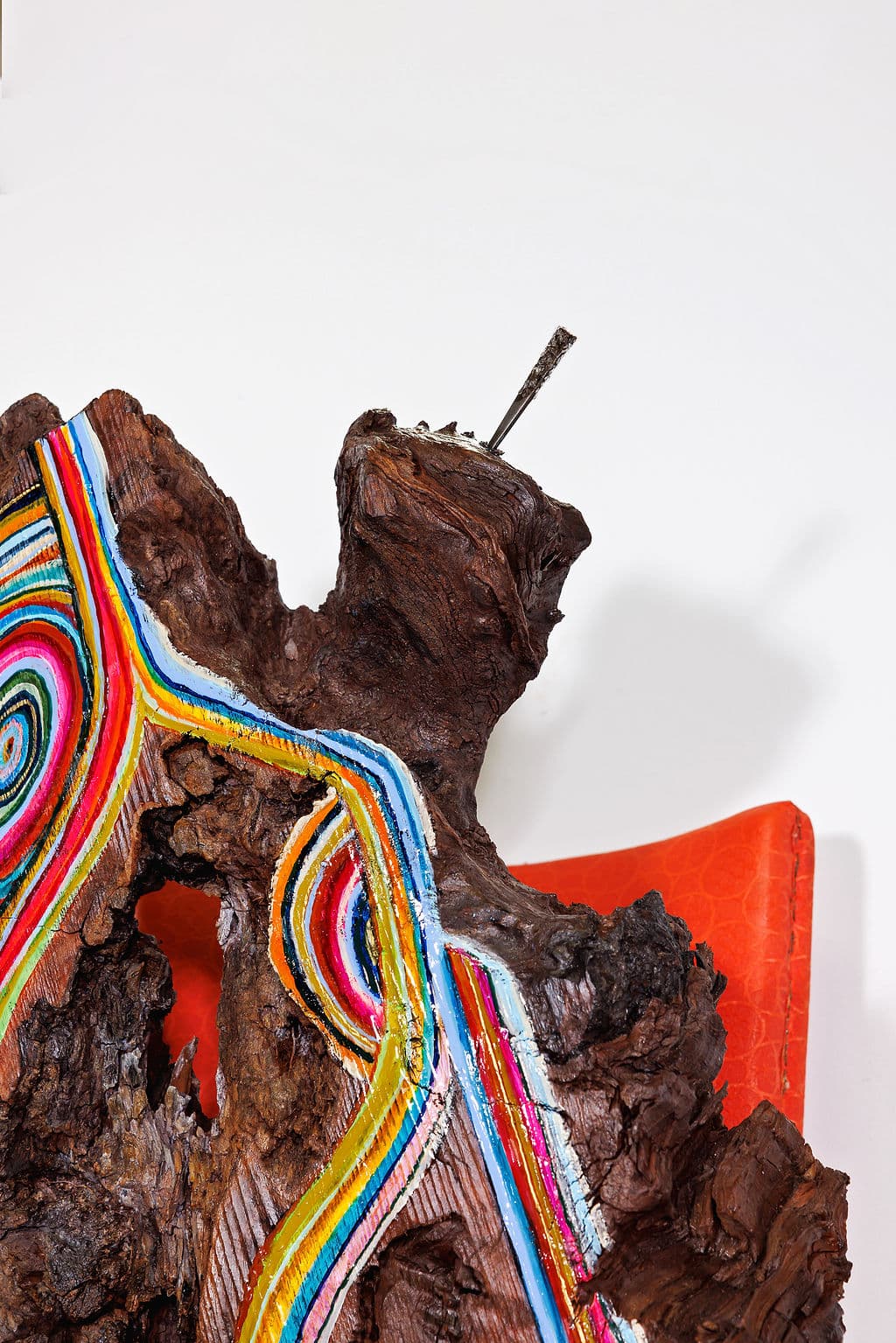
A single industrial nail, dramatically dipped in crushed glass, pierces the redwood like a crystalline exclamation point. This element adds both textural complexity and symbolic weight, the industrial nail representing human intervention in natural systems, while the crushed glass creates a sparkling, jewel-like quality that catches and refracts light. The nail becomes a metaphor for the way human activity has penetrated even the most ancient natural systems, while the glass suggests both fragmentation and the possibility of transformation into something beautiful.
The piece tells multiple interwoven stories: the environmental awakening of the 1960s when redwood protection finally began, the design story of an era’s optimism and synthetic materials, and the ongoing story of how contemporary artists can honor both natural heritage and pivotal historical moments. The artist’s deliberate choice to pair 1960s design with old-growth redwood creates a powerful tribute to the decade when environmental consciousness emerged – when legislation like the Redwood National and State Parks Act began protecting these ancient forests for future generations. The title “Woodstock” evokes not just the famous 1969 music festival but the broader cultural moment when environmental consciousness merged with counterculture movements, representing the decade when America finally began protecting its most majestic trees.
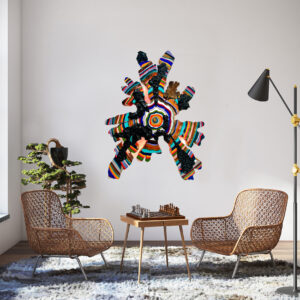
Measuring 40″H x 20″W x 18″D, “Woodstock” commands significant wall presence while maintaining proportions that work in both residential and institutional settings. The piece is securely mounted using a custom acrylic cleat system that ensures both safety and an elegant floating presentation, allowing the sculpture to appear to hover slightly away from the wall.
This work particularly appeals to collectors of environmental art, California heritage pieces, vintage furniture art, and sustainable art practices. It offers a sophisticated commentary on conservation, design history, and the complex relationships between human creativity and natural resources. The piece would be equally powerful in a contemporary art museum, an environmentally conscious residence, or a corporate collection focused on sustainability and California history.
“Woodstock” represents Christi Meril’s ongoing investigation into how natural forms whether the balanced stones of cairns or the stratified patterns of ancient wood can be honored and reinterpreted through contemporary artistic intervention. The redwood’s geological-like patterns connect directly to her signature exploration of stone formations and rock textures, showing how the same forces that shape stone also create beauty in organic materials over vast spans of time.